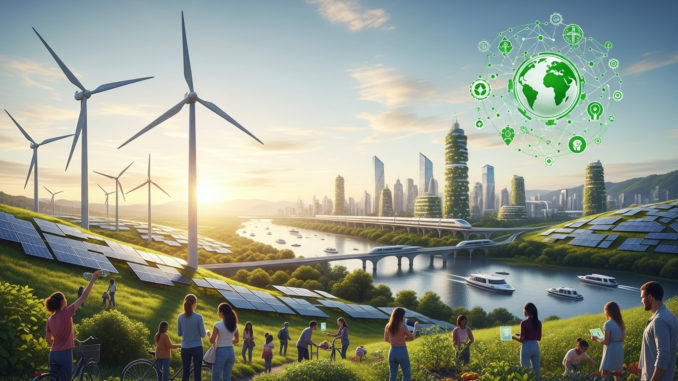
The global transition toward a greener economy is gaining momentum as new sustainability policies begin to take effect across multiple regions. Governments, businesses, and institutions are increasingly aligning economic growth with environmental responsibility, signaling a long-term shift in how development is measured and achieved.
This movement reflects growing recognition that sustainable practices are not only environmentally necessary but also economically strategic.
A Global Push Toward Sustainable Growth
In recent years, sustainability has moved from a niche concern to a central pillar of economic policy. New regulations and international agreements are encouraging industries to reduce emissions, improve resource efficiency, and invest in cleaner technologies.
Organizations linked to the United Nations have continued to promote sustainability frameworks that balance environmental protection with economic development. These efforts are influencing national policies, corporate strategies, and investment priorities worldwide.
Policy Changes Begin to Shape Markets
As sustainability-focused policies are implemented, their impact is becoming visible across key sectors. Energy, transportation, manufacturing, and agriculture are among the industries most affected by new environmental standards.
Rather than slowing growth, many of these policies aim to guide innovation. Companies are adapting by developing cleaner production methods, investing in renewable energy, and improving supply chain transparency. In many cases, these adjustments are helping businesses reduce long-term risks and operational costs.
Businesses Adapt to a Low-Carbon Future
Corporations are increasingly integrating sustainability into their long-term planning. Environmental, social, and governance (ESG) considerations are now common in corporate reporting and decision-making.
This shift reflects changing expectations from consumers, partners, and regulators. Companies that demonstrate responsible environmental practices are often better positioned to build trust and maintain competitiveness in global markets.
Importantly, sustainability is no longer viewed solely as a regulatory requirement but as a strategic advantage.
Economic Opportunities in the Green Transition
The expansion of the green economy is also creating new opportunities. Growth in renewable energy, clean technology, and sustainable infrastructure is generating demand for skilled labor and innovation.
Governments see green investment as a way to stimulate economic activity while addressing long-term environmental challenges. As a result, sustainability initiatives are increasingly linked to job creation, technological advancement, and economic resilience.
Challenges Remain, but Direction Is Clear
Despite progress, challenges remain. Transition costs, regulatory complexity, and uneven adoption across regions continue to pose obstacles. Developing economies, in particular, must balance sustainability goals with immediate development needs.
However, the overall direction is clear. Sustainability policies are becoming more consistent, coordinated, and embedded in economic planning. This consistency provides businesses and markets with clearer signals for long-term decision-making.
Conclusion
The green economy is no longer a future concept—it is an active and growing part of the global economic system. As new sustainability policies take effect, they are reshaping industries, influencing business strategies, and redefining growth priorities.
While challenges remain, the momentum behind sustainable development suggests that environmental responsibility and economic progress will increasingly move forward together.
Leave a Reply